The California Department of Justice (CA DOJ) and the Office of the Attorney General (OAG) form the state’s top legal authority, serving as the chief law enforcement and legal advisory body for California. The Attorney General, elected every four years with a two-term limit, leads this office and represents the people in both civil and criminal matters. The CA DOJ operates under the Attorney General and functions as the state’s legal backbone, offering counsel to government agencies, enforcing laws, and protecting public safety. Its responsibilities span criminal justice, consumer protection, civil rights, environmental enforcement, and support for local law enforcement. With over 4,500 employees, the department ensures that state laws are upheld, justice is administered fairly, and Californians are safeguarded from fraud, abuse, and crime.
The office plays a critical role in maintaining transparency, accountability, and justice across California. It manages statewide crime data, investigates complex criminal networks, combats identity theft and cybercrime, and supports victims of crime. Through specialized bureaus and divisions, the CA DOJ enforces laws related to firearms, gambling, narcotics, elder abuse, and public corruption. It also leads initiatives to protect voting rights, housing rights, and workers’ rights. The department actively prosecutes antitrust violations, environmental crimes, and hate crimes, while promoting government ethics and open records. By collaborating with district attorneys, police departments, and federal agencies, the California Attorney General’s office ensures a coordinated response to emerging threats and systemic challenges in the justice system.
Core Functions and Responsibilities
The California Department of Justice and Office of the Attorney General perform a wide range of legal and enforcement duties that impact every resident. These functions are carried out through multiple divisions, each focusing on specific areas of law and public safety. The office acts as the state’s chief legal officer, representing California in court, advising state agencies, and enforcing laws that protect citizens and natural resources. Its work ensures that government operations remain transparent, accountable, and aligned with constitutional rights.
Legal Representation and Advisory Role
The Attorney General represents the State of California in all legal matters, including lawsuits, appeals, and constitutional challenges. This includes defending state laws, enforcing regulations, and intervening in cases that affect public interest. The office provides legal opinions to state officers, boards, and commissions, guiding them on compliance with state and federal laws. These opinions carry legal weight and help shape policy decisions across government agencies.
- Represents California in civil and criminal litigation
- Issues formal legal opinions to state entities
- Defends state statutes challenged in court
- Intervenes in cases involving public health, safety, or civil rights
Law Enforcement Support and Coordination
The CA DOJ supports local law enforcement agencies by providing investigative resources, forensic services, and intelligence sharing. It maintains statewide databases for criminal records, missing persons, and sex offenders. The Bureau of Investigation & Intelligence conducts complex criminal probes, especially those crossing county or state lines. The department also trains local officers on emerging threats like cybercrime and human trafficking.
- Operates the California Law Enforcement Telecommunications System (CLETS)
- Maintains the Automated Fingerprint Identification System (AFIS)
- Supports multi-agency task forces on gangs and narcotics
- Provides forensic analysis through the Bureau of Forensic Services
Statewide Crime Data and Reporting
The CA DOJ collects, analyzes, and publishes crime statistics for California. This data helps law enforcement agencies allocate resources, identify crime trends, and develop prevention strategies. The Crime Data website offers over 5,000 statistical tables, 59 reports, and 29 publications. Users can search by county, crime type, or year to access detailed information on arrests, convictions, and incarceration rates.
| Data Type | Availability |
| Arrest Statistics | By county, age, race, and offense |
| Homicide Reports | Annual summaries with victim and suspect details |
| Sex Offender Registry | Public search by name, location, or ZIP code |
Consumer Protection and Fraud Prevention
The California Attorney General’s Office protects consumers from deceptive practices, scams, and unfair business conduct. It enforces state consumer protection laws, investigates complaints, and prosecutes violators. The division focuses on industries prone to abuse, including lending, debt collection, home repairs, and online commerce. By taking legal action against fraudulent companies, the office recovers funds for victims and deters future misconduct.
Types of Consumer Complaints Handled
The office accepts and investigates complaints related to false advertising, identity theft, predatory lending, and defective products. It also targets companies that exploit vulnerable populations, such as seniors or low-income families. Complaints can be filed online, by phone, or by mail. The Attorney General’s team reviews each submission and may initiate civil or criminal proceedings if laws are violated.
- Debt collection harassment
- Unlicensed contractors and home improvement scams
- Credit repair and loan modification fraud
- Phony charities and donation requests
- Online shopping and subscription traps
Enforcement Actions and Legal Recoveries
When violations are confirmed, the Attorney General can file lawsuits, obtain court orders, and impose fines. In some cases, the office secures restitution for affected consumers. Notable actions include shutting down illegal payday lenders, stopping foreclosure rescue scams, and penalizing companies for data breaches. These enforcement efforts are publicly documented and serve as deterrents to other bad actors.
- File civil lawsuits in state court
- Seek injunctions to halt illegal operations
- Impose civil penalties up to $2,500 per violation
- Distribute recovered funds to victims
Public Education and Self-Protection Resources
The CA DOJ provides free guides, alerts, and tools to help Californians avoid scams. The Consumer Alerts page publishes warnings about current fraud trends, such as fake government calls or phishing emails. The office also offers checklists for safe online shopping, credit monitoring, and reporting identity theft. These resources are available in multiple languages and are designed for easy public use.
| Resource | Access Method |
| Consumer Alerts | Email subscription or website |
| Identity Theft Affidavit | Downloadable PDF form |
| Fraud Reporting Portal | Online at oag.ca.gov/fraud |
Criminal Justice and Law Enforcement Divisions
The Division of Law Enforcement within the CA DOJ includes several specialized bureaus that support criminal investigations and uphold public safety. These units employ sworn agents, forensic experts, and analysts who work with local, state, and federal partners. Their work covers narcotics, firearms, gambling, elder abuse, and cybercrime. Each bureau has distinct responsibilities but shares the goal of reducing crime and supporting justice.
Bureau of Firearms
This bureau regulates firearm sales, enforces gun laws, and maintains the Dealer Record of Sale (DROS) system. It conducts background checks on all gun buyers in California and investigates illegal firearm trafficking. The bureau also certifies firearm safety devices and manages the Armed Prohibited Persons System (APPS), which identifies individuals who legally bought guns but later became prohibited from owning them.
- Processes over 500,000 background checks annually
- Maintains the Stolen Firearms Database
- Conducts compliance inspections of gun dealers
- Supports local agencies in gun violence investigations
Bureau of Forensic Services
The Bureau of Forensic Services provides scientific support to criminal investigations across California. It operates regional crime labs that analyze DNA, fingerprints, drugs, firearms, and digital evidence. The bureau also maintains the state’s DNA database (CAL-DNA) and assists in identifying human remains. Its experts testify in court and train law enforcement on forensic best practices.
- Offers DNA, drug, and toxicology testing
- Maintains the Automated Fingerprint Identification System (AFIS)
- Supports cold case investigations
- Provides expert witness testimony
Bureau of Medi-Cal Fraud and Elder Abuse
This bureau investigates fraud in the Medi-Cal program, which provides health care to low-income Californians. It targets providers who bill for services not rendered, upcode procedures, or prescribe unnecessary medications. The unit also investigates financial and physical abuse of elderly and dependent adults. It works with district attorneys to prosecute cases and recover stolen funds.
| Focus Area | Common Violations |
| Medi-Cal Fraud | False billing, kickbacks, phantom patients |
| Elder Abuse | Financial exploitation, neglect, physical harm |
Victims’ Services and Support Programs
The California Victims’ Services Unit assists individuals affected by crime, ensuring their rights are protected throughout the legal process. This includes notification of court dates, appeals, and parole hearings under Marsy’s Law. The unit also connects victims with counseling, financial aid, and legal assistance. Its work spans domestic violence, human trafficking, hate crimes, and missing persons cases.
Notification and Rights Enforcement
Victims have the right to be informed about key developments in their cases. The CA DOJ manages a notification system that alerts victims when an offender is arrested, released, or escapes. This service is free and can be requested online or by phone. The office also helps victims assert their rights in court, including the right to be heard during sentencing.
- Register for victim notifications at victimnotification.ca.gov
- Receive alerts via phone, email, or text
- Request updates on parole hearings and appeals
- Access court accompaniment services
Missing Persons Unit
The Missing Persons Unit supports law enforcement in locating missing individuals, especially children and vulnerable adults. It maintains a public database of missing persons, publishes bulletins, and coordinates with the National Center for Missing & Exploited Children. The unit also compiles annual statistics on missing persons cases in California.
- Search the Missing Persons Database at missingpersons.ca.gov
- Submit a missing person report to local police
- Request a missing person poster
- Access resources for families of the missing
Domestic Violence and Human Trafficking Support
The office funds shelters, hotlines, and legal aid for victims of domestic violence and human trafficking. It prosecutes traffickers under California’s tough anti-trafficking laws and operates a 24/7 hotline for reporting tips. The Human Trafficking Task Force coordinates with NGOs and law enforcement to rescue victims and dismantle criminal networks.
| Service | Contact Method |
| Domestic Violence Hotline | 1-800-799-SAFE (7233) |
| Human Trafficking Tip Line | 1-888-373-7888 |
| Victim Compensation Program | Apply at vcgcb.ca.gov |
Civil Rights and Social Justice Initiatives
The California Attorney General’s Office enforces civil rights laws and combats discrimination in housing, employment, voting, and public accommodations. It investigates complaints of hate crimes, police misconduct, and systemic bias. The Civil Rights Enforcement Section files lawsuits against entities that violate state or federal civil rights statutes.
Hate Crime Reporting and Prosecution
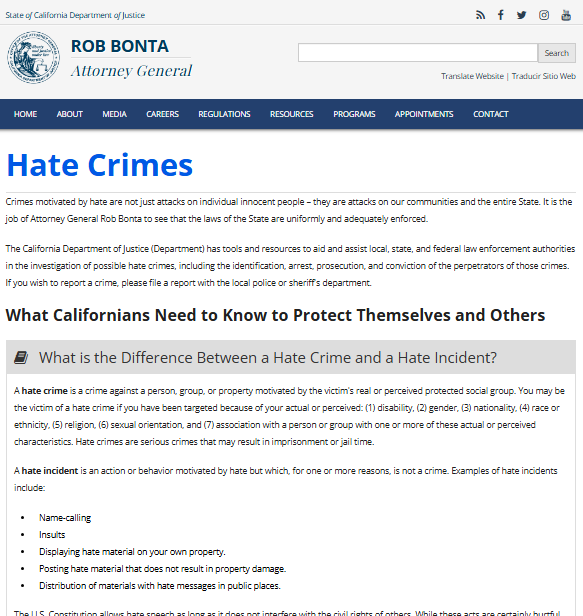
California has one of the strongest hate crime laws in the nation. The CA DOJ collects data on bias-motivated incidents and prosecutes offenders under Penal Code 422.55. The office also supports victims through counseling and legal aid. Reports can be filed online or with local law enforcement.
- Hate Crime Hotline: 1-800-735-2922 (TTY)
- Online reporting at https://oag.ca.gov/hatecrimes
- Annual hate crime statistics published each spring
Voting Rights and Election Integrity
The office protects voting rights by enforcing laws against voter suppression, intimidation, and fraud. It monitors elections, investigates complaints, and prosecutes violations. The Attorney General also educates voters on their rights and supports language access at polling places.
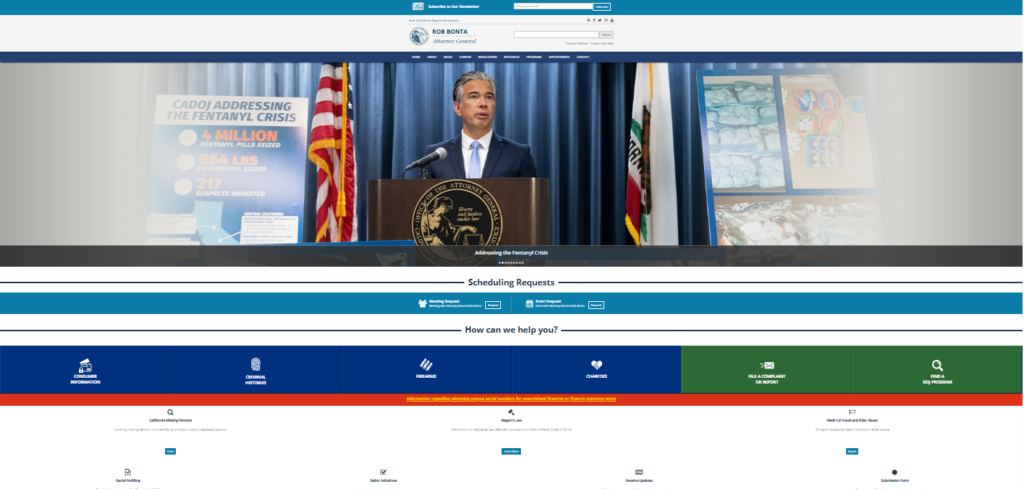
- Report voting issues at https://oag.ca.gov/
- Request bilingual voting materials
- File complaints about polling place access
Police Accountability and Reform
The CA DOJ investigates patterns of misconduct by law enforcement agencies and can take over prosecutions when local offices decline. It also reviews use-of-force policies and recommends reforms. The office publishes reports on police shootings and custodial deaths.
| Initiative | Purpose |
| Pattern-or-Practice Investigations | Identify systemic abuses in police departments |
| Use-of-Force Database | Track officer-involved shootings statewide |
Public Records and Government Transparency
The California Department of Justice supports open government by managing public records requests and ensuring compliance with the California Public Records Act (CPRA). Citizens can request documents related to investigations, policies, and agency operations. The office processes thousands of requests annually and publishes frequently requested records online.
How to Submit a Public Records Request
To request records, submit a written request to the CA DOJ Public Records Coordinator. Include a clear description of the documents sought, your contact information, and preferred format (email, mail, or pickup). The office has 10 days to respond and may extend the deadline by 14 days for complex requests.
- Email: publicrecords@doj.ca.gov
- Mail: P.O. Box 944255, Sacramento, CA 94244-255
- Online form: oag.ca.gov/contact/
Exemptions and Response Process
Some records are exempt from disclosure, including ongoing investigations, personal privacy data, and attorney-client communications. The office must justify any denial in writing. If a request is denied, the requester can appeal to the Attorney General or file a lawsuit in the superior court.
- Request received and logged
- Review for exemptions and redactions
- Response sent within 10 business days
- Appeal process available if denied
Online Databases and Published Reports
The CA DOJ maintains several public databases, including the Sex Offender Registry, Campaign Finance Database, and Lobbying Activity Reports. These are searchable and updated regularly. The office also publishes annual reports on its activities, budget, and enforcement actions.
| Database | URL |
| Sex Offender Registry | meganslaw.ca.gov |
| Campaign Finance | cal-access.sos.ca.gov |
| Lobbying Reports | lobbying.ca.gov |
Environmental Justice and Climate Enforcement
The California Attorney General’s Office enforces environmental laws to protect communities from pollution, climate change, and unsafe industrial practices. It prosecutes companies that violate air, water, and hazardous waste regulations. The office prioritizes environmental justice by focusing on low-income and minority communities disproportionately affected by pollution.
Enforcement of Environmental Laws
The CA DOJ files lawsuits against polluters under the California Environmental Quality Act (CEQA), Clean Water Act, and other statutes. It has taken action against oil companies, chemical manufacturers, and waste facilities. These cases often result in fines, cleanup orders, and community benefits.
- Prosecutes illegal dumping and toxic releases
- Challenges to projects that harm protected species
- Enforces climate disclosure laws for corporations
Climate Change Litigation
The office has joined multi-state lawsuits against fossil fuel companies for misleading the public about climate change. It also defends California’s climate policies, such as the cap-and-trade program and vehicle emissions standards, against legal challenges from other states or industries.
- Defends state climate regulations in court
- Supports local governments in climate adaptation
- Monitors corporate environmental compliance
Community Engagement and Environmental Justice
The CA DOJ holds public forums in affected communities to hear concerns about pollution and health risks. It works with local groups to investigate environmental hazards and push for remediation. The office also provides legal support to community organizations fighting environmental injustice.
| Program | Focus |
| Environmental Justice Task Force | Advises on policy and enforcement |
| Community Air Protection Program | Reduces pollution in high-risk areas |
Privacy Rights and Data Protection
The California Attorney General enforces the California Consumer Privacy Act (CCPA) and the California Privacy Rights Act (CPRA), which give California residents control over their personal data.
- To access official privacy rights information, use the main Attorney General website:
- https://oag.ca.gov/
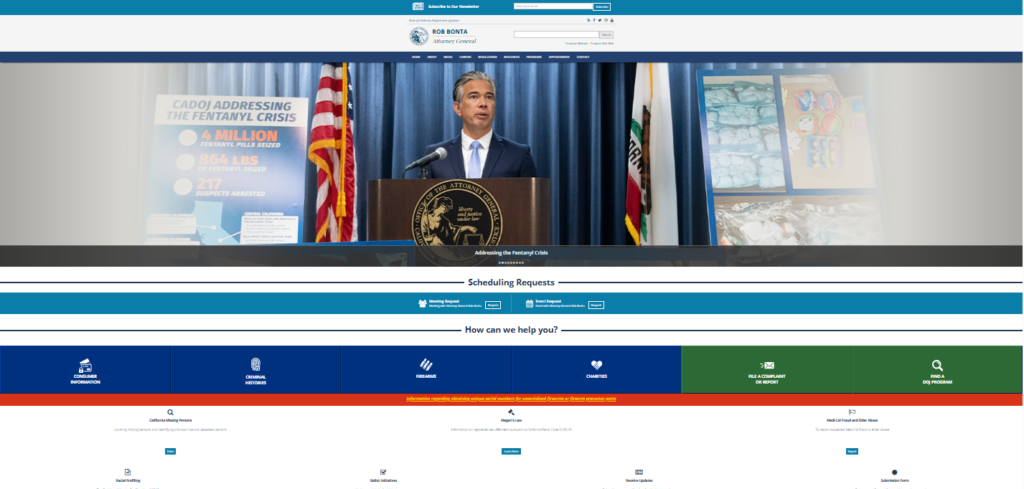
- From there, navigate to:
Privacy / Consumer Protection / Data Security sections
Enforcement of Data Privacy Laws
The California Attorney General enforces compliance with state privacy laws, including actions against businesses that fail to protect consumer data or violate privacy regulations.
Enforcement powers include:
- Civil penalties for violations of CCPA/CPRA
- Investigations into data breaches and misuse of personal data
- Compliance audits for businesses and data brokers
Consumer Rights Under CCPA/CPRA
California residents have the right to:
- Know what personal data is collected
- Request deletion of personal information
- Opt out of data sales
- Request correction of inaccurate data
These rights can be exercised directly with businesses. The Attorney General’s website guides how to submit requests and understand your rights.
Cybersecurity and Identity Theft Prevention
The California Attorney General supports cybersecurity enforcement and identity theft prevention through statewide consumer protection programs.
Services include:
- Identity theft guidance
- Cybercrime reporting resources
- Consumer fraud prevention education
Search Tools and Online Resources
The California Department of Justice provides several online tools for searching public records, crime data, and legal information. These tools are free, user-friendly, and updated regularly. Below are step-by-step instructions for using key search functions.
Search the Sex Offender Registry
To search the registry, go to https://www.meganslaw.ca.gov/Disclaimer. On the homepage, you will see a search bar labeled “Search by Name or Address.” Type the offender’s first and last name in the “Name” field, or enter a street address, city, or ZIP code in the “Location” field. Click the “Search” button. The system will return a list of registered offenders, including their photo, name, address, offense type, and risk level. Results can be filtered by city, county, or school district.
Request Crime Data by County
Visit https://oag.ca.gov/crime and click on “Crime Statistics.” Select “County-Level Data” from the menu. Choose a county from the dropdown list labeled “Select a County.” Then pick a year from the “Year” dropdown. Click “Generate Report.” The system will display arrest totals, crime rates, and demographic breakdowns for that county and year. Data includes violent crimes, property crimes, and drug arrests.
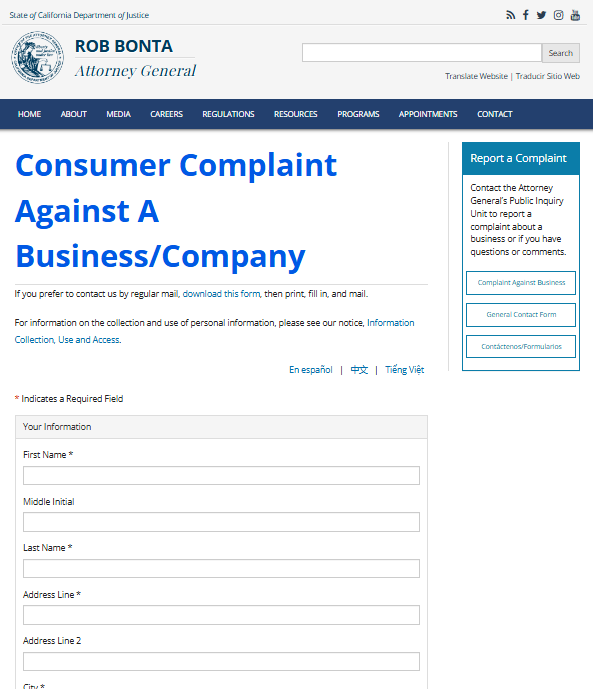
File a Consumer Complaint
Go to https://oag.ca.gov/contact/consumer-complaint-against-business-or-company. Click on “File a Consumer Complaint.” Fill in your name, address, and phone number in the “Complainant Information” section. In the “Business Information” section, enter the company’s name and address. Describe the issue in the “Complaint Details” box, including dates and amounts involved. Upload supporting documents if available. Click “Submit.” You will receive a confirmation number, and a caseworker will contact you within 10 days.
Search for Missing Persons
Navigate to https://oag.ca.gov/. Click on “Search the Database.” Enter the person’s name in the “First Name” and “Last Name” fields. Optionally, add age, city, or date last seen. Click “Search.” The system will return matching records with photos, descriptions, and last known locations. If no match appears, you can submit a new report through the “Report a Missing Person” link.
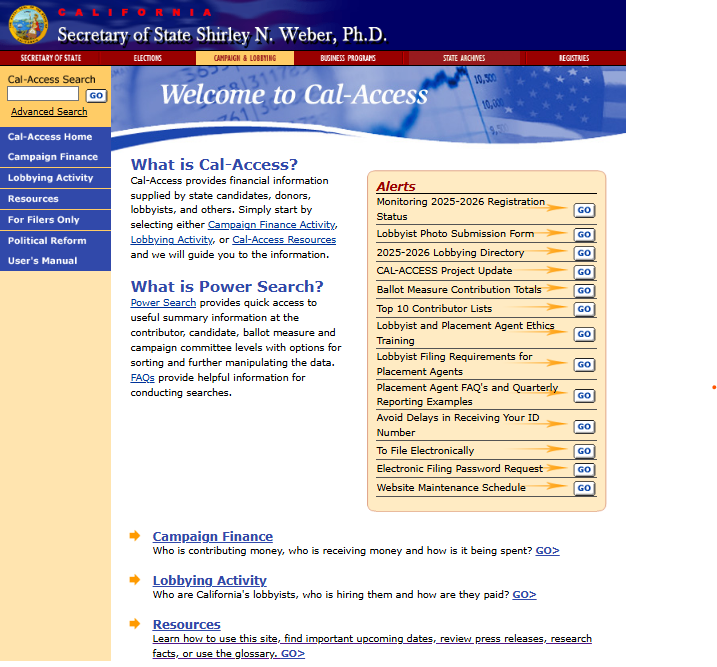
Check Campaign Finance Records
Visit https://cal-access.sos.ca.gov/. Click on “Campaign Finance.” Use the search box to type a candidate’s name, committee name, or ballot measure. Select the election cycle from the dropdown. Click “Search.” The system will show contributions, expenditures, and loan records. Each entry includes donor name, amount, date, and purpose.
| Address | 1300 I Street, Sacramento, CA 95814 |
| Phone | (916) 445-9555 |
| Hours | Monday–Friday, 8:00 AM – 5:00 PM (Pacific Time) |
FAQs About the California Department of the Attorney General
The California Attorney General’s Office plays a central role in enforcing state laws, overseeing major criminal matters, protecting public rights, and supporting victims of crime. It also provides transparency through public records, publishes official reports, and coordinates with local and federal agencies on complex investigations. The following FAQs explain its key responsibilities, services, and how the public can access support or information.
What is the role of the California Attorney General in criminal cases?
The California Attorney General represents the state in criminal prosecutions, especially in cases involving statewide impact, complex investigations, or when a local district attorney declines to act. The office prosecutes organized crime, human trafficking, public corruption, and large-scale fraud. It also handles appeals in criminal cases and can take over investigations if there is a conflict of interest. The Attorney General works with local law enforcement to ensure consistent enforcement of state laws. In addition, the office manages the state’s criminal databases, including the sex offender registry and fingerprint records. It also provides legal training to prosecutors and police agencies across California.
How can I report a hate crime in California?
To report a hate crime, contact local law enforcement immediately. You can also file a report directly with the California Department of Justice at oag.ca.gov/hatecrimes or call the Hate Crime Hotline at 1-800-735-2922 (TTY). Include details such as the date, location, description of the incident, and any evidence like photos or videos. The CA DOJ collects hate crime data and may investigate if the local agency does not act. Victims are entitled to protection, counseling, and legal support. The office publishes annual hate crime statistics and works with community groups to prevent bias-motivated violence. Reporting helps track trends and allocate resources to high-risk areas.
What services does the Victims’ Services Unit provide?
The Victims’ Services Unit offers support to crime victims and their families, including notification of court proceedings, parole hearings, and offender releases under Marsy’s Law. It connects victims with counseling, shelter, and financial aid through the Victim Compensation Program. The unit also assists with restitution requests and court accompaniment. For missing persons cases, it maintains a searchable database and issues bulletins. The office provides resources for domestic violence, human trafficking, and elder abuse victims. Services are free and confidential. Victims can register for updates online or by calling the unit directly. The goal is to ensure victims’ rights are upheld throughout the justice process.
How does the CA DOJ enforce environmental laws?
The California Department of Justice enforces environmental laws by investigating violations, filing civil or criminal lawsuits, and securing court orders for cleanup and penalties. It targets polluters under statutes like the Clean Water Act, CEQA, and hazardous waste regulations. The office prioritizes cases affecting disadvantaged communities and has sued oil companies for climate deception. It also defends state environmental policies in court against industry challenges. The CA DOJ works with the EPA and local agencies to monitor compliance and respond to spills or toxic releases. Enforcement actions have resulted in millions in fines and funded community health programs.
Can I access public records from the Attorney General’s office?
Yes, you can request public records from the CA DOJ under the California Public Records Act. Submit a written request by email to publicrecords@doj.ca.gov or mail to P.O. Box 944255, Sacramento, CA 94244-255. Describe the records clearly and include your contact information. The office must respond within 10 business days, though complex requests may take longer. Some records are exempt, such as ongoing investigations or personal data. If denied, you can appeal to the Attorney General or sue in court. Frequently requested records, like annual reports and enforcement actions, are published online at oag.ca.gov.